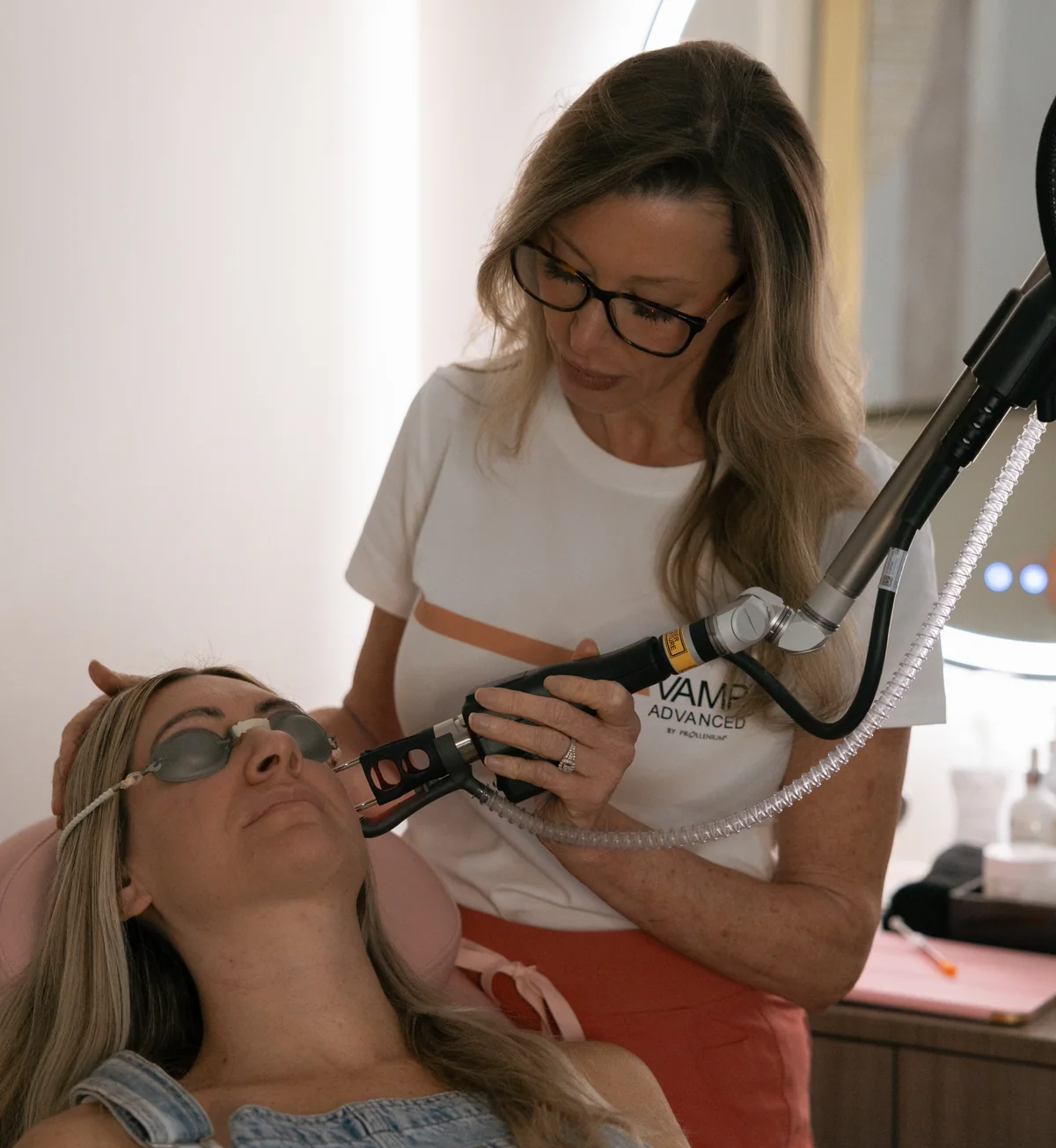
CoolPeel and deeper DEKA resurfacing are not competing treatments. They are different ways I can use Alia’s Tetra PRO CO2 laser to meet different skin needs.
CoolPeel is the most popular setting because it offers fractional CO2 resurfacing with a lighter touch and a more manageable recovery for many clients. Deeper DEKA resurfacing allows us to be more corrective when concerns such as acne scars, established wrinkles, or skin laxity call for greater intensity.
The better question is not “Which treatment is best?” It is “Which level of treatment makes sense for your skin, your goals, and the recovery you can realistically manage?”
What both treatments have in common
Both use CO2 laser energy to create controlled treatment zones in the skin. That process supports renewal and stimulates the skin’s natural collagen response.
Depending on the setting and treatment plan, CO2 resurfacing may help improve:
- Sun damage and uneven tone
- Fine lines and wrinkles
- Rough or uneven texture
- Visible pores
- Acne scars
- Overall skin quality
- Skin laxity
The technology may be the same, but the depth, intensity, recovery, and goal can be very different.
CoolPeel: lighter-touch resurfacing
CoolPeel is often a good fit for someone who wants meaningful improvement without committing to the recovery associated with deeper resurfacing.
I may consider it when the priorities include early sun damage, visible pores, crepey texture, fine lines, mild acne scarring, or an overall improvement in skin quality. It can also be useful for clients who want to begin resurfacing conservatively or maintain previous results.
What clients often like about CoolPeel
- A more approachable recovery window
- Adjustable treatment based on the skin and goal
- Improvement in several concerns at once
- A result that develops without changing facial features
- The option to use it as part of a longer-term skin plan
Lighter treatment does not mean zero recovery. Redness, warmth, dryness, rough texture, and flaking can occur. Your exact experience depends on the settings used and how your skin heals.
Deeper DEKA resurfacing: more corrective treatment
Sometimes a lighter pass is not enough to create the level of change a client wants. Deeper DEKA resurfacing can be considered for more established concerns, including deeper wrinkles, more noticeable acne scarring, advanced sun damage, or skin laxity.
A deeper treatment asks more of the skin. It may also involve more visible healing, more detailed aftercare, and a longer recovery window. That tradeoff should be discussed honestly before treatment—not discovered afterward.
When deeper resurfacing may make sense
- Your concern sits deeper in the skin
- Previous lighter treatments have not produced enough change
- You are seeking correction rather than a light refresh
- You can commit to the required preparation and recovery
- Your skin and health history make you an appropriate candidate
Deeper is not automatically better. The right setting is the one that creates a worthwhile benefit without asking the skin to take on unnecessary risk.
A practical side-by-side comparison
CoolPeel may be the better starting point if:
- You want improvement with less social downtime
- Your concerns are mild to moderate
- You prefer a gradual plan or series
- You are new to laser resurfacing
- You want to support texture, tone, pores, or early signs of aging
Deeper DEKA resurfacing may be worth discussing if:
- Acne scars or wrinkles are more established
- Laxity is part of the concern
- You want a more corrective treatment
- You understand and can accommodate a longer recovery
- A clinical assessment shows that the added depth is appropriate
These are general patterns, not rules. Two people with the same concern can need different plans because skin tone, sensitivity, medical history, previous treatments, lifestyle, and expectations all matter.
Why a consultation matters
A photograph and a treatment name are not enough to choose a resurfacing setting safely. During consultation, I look at the quality and thickness of the skin, the type and depth of the concern, pigment behavior, health history, products, medications, prior procedures, and your tolerance for recovery.
I also ask what “better” means to you. Smoother makeup application? Softer acne scars? Less crepey texture? A brighter, more even look? Clear goals help us choose a treatment that is specific rather than simply stronger.
Can CoolPeel and deeper DEKA be part of the same long-term plan?
Potentially, yes. A skin plan can change as your skin changes. Some clients may begin with a lighter treatment. Others may need a deeper corrective treatment first and use lighter care for maintenance later.
The sequence should be intentional. Treatments are not collectibles, and more procedures do not automatically create healthier skin.
Which option gives the most natural result?
Both can look natural because neither is intended to change your features. The goal is to improve the quality of the skin you already have.
Natural does not mean weak. It means the treatment matches your anatomy, your skin, and the result you want—without chasing intensity for its own sake.
The Alia recommendation
CoolPeel is one of my specialties and one of the treatments I enjoy most because the Tetra PRO gives me flexibility. I can work conservatively when that is the right answer and consider deeper correction when the skin and the client’s goals justify it.
My role is not to talk you into the strongest option. It is to explain the differences, recommend the setting that makes sense, and tell you when laser resurfacing is not the right treatment at all.
Not sure where to begin? Book a consultation at Alia Skin Clinic in Buford. We will look at your skin together and decide whether CoolPeel, deeper DEKA resurfacing, another treatment, or a better home-care plan belongs first.