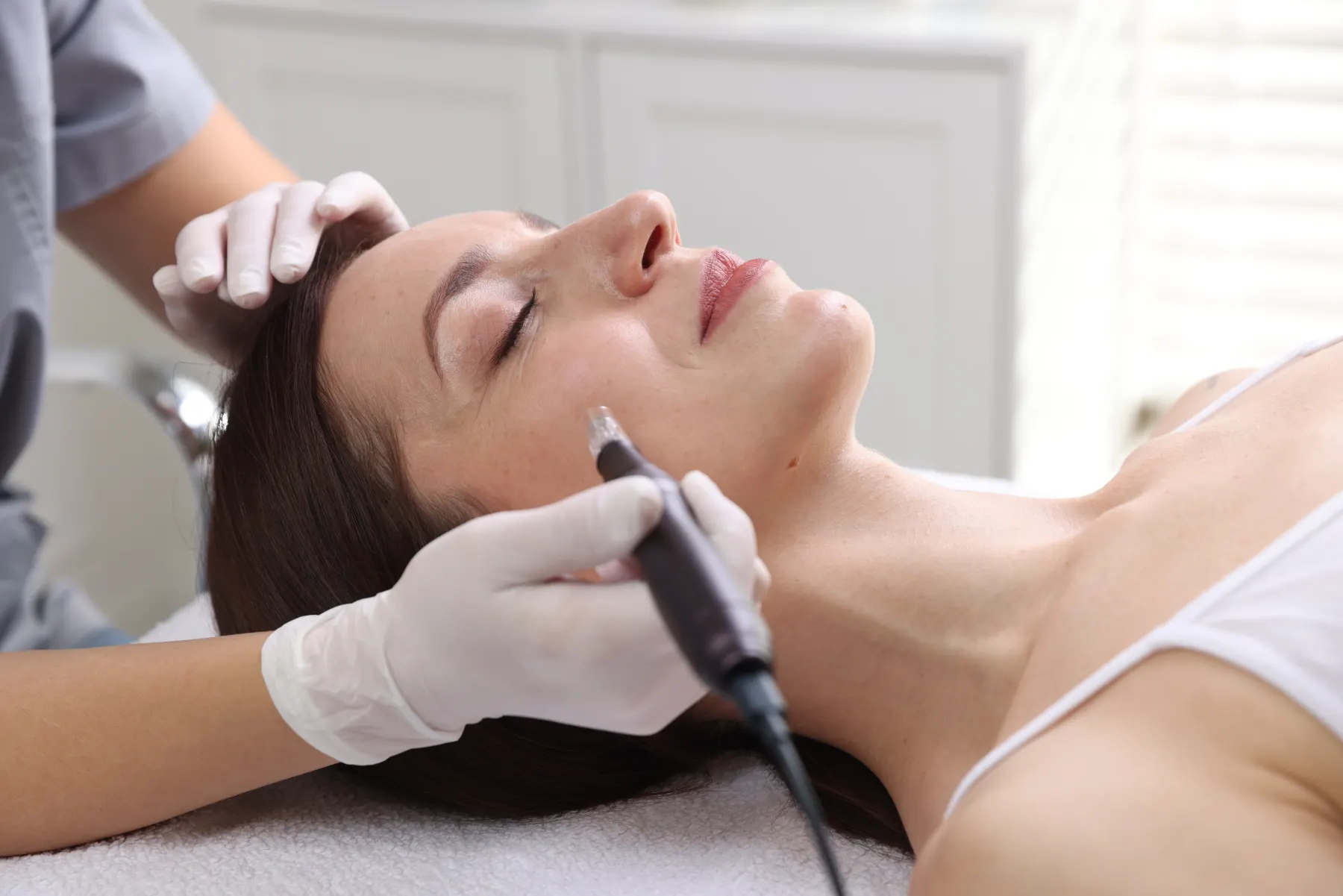
Scars tell part of your skin's healing story, but that does not mean you have to feel comfortable with how every scar looks or feels. A healed surgical or non-surgical scar may remain raised, firm, uneven, or simply more noticeable than the surrounding skin.
Laser treatment may help improve those concerns. The important word is improve. No responsible treatment plan should promise to erase a scar completely.
At Alia, scar treatment starts with an individual assessment. The scar itself, the surrounding skin, your healing history, and what you hope to achieve all help determine whether fractional CO2 resurfacing may be appropriate.
How fractional CO2 laser treatment works on scars
Alia uses the Tetra PRO fractional CO2 laser. Instead of treating the entire skin surface, fractional treatment creates precise microscopic columns in the scarred tissue while leaving areas of surrounding skin intact.
That controlled process prompts the skin's natural healing response. As healing progresses, the skin produces new collagen and elastin and begins remodeling existing collagen. Over time, this may help a scar look smoother, feel softer, and become less noticeable.
What kinds of scars may be considered?
Fractional CO2 treatment may be considered for some healed surgical and non-surgical scars when texture, firmness, or visibility is the main concern. It is not automatically the right choice for every scar.
Scar age, color, depth, location, and type all matter. Your skin type, tendency to develop pigmentation changes, health history, previous treatments, and how the original wound healed also factor into the plan. Active wounds, infection, and skin that has not completely healed need medical evaluation before resurfacing treatment is considered.
Why timing matters
A scar continues changing as it heals. Treating too early may not be appropriate, while waiting indefinitely is not always necessary. There is no single timeline that fits every person or procedure.
During consultation, Angie will review when the injury or surgery occurred, how the area has healed, and whether the scar appears ready for treatment. If another medical professional is involved in your care, coordination may be appropriate before taking the next step.
What improvement can laser treatment provide?
The goal is usually gradual improvement in texture, firmness, and overall visibility. A scar may feel softer, sit more evenly with the surrounding skin, or become less visually prominent.
Results vary, and change takes time. Collagen remodeling continues after the surface has healed, so the final effect cannot be judged immediately. Some scars may benefit from more than one session, while others may need a different or combined approach.
What does recovery look like?
Recovery depends on the treatment depth, the size and location of the scar, and how your skin responds. Redness, warmth, swelling, sensitivity, dryness, or flaking may occur. More intensive settings can involve a more noticeable recovery period.
You will receive preparation and aftercare instructions specific to your treatment. Following them carefully matters. Do not pick or exfoliate healing skin, use only the products recommended for you, and protect the area from unnecessary sun exposure.
When should I call the clinic?
Contact the clinic if you have increasing pain, unexpected blistering, drainage, signs of infection, or any reaction that concerns you. It is always better to ask than to wait and wonder.
How many treatments will I need?
There is no preset number. Angie will assess how the scar responds after it has healed before recommending another session. The plan should be guided by your progress rather than a package sold in advance.
A consultation is the right first step
The best scar plan starts with realistic expectations. Laser treatment can support meaningful improvement, but it cannot undo the original injury or guarantee that a scar will disappear.
If a healed scar concerns you, a consultation gives Angie the opportunity to examine it, discuss what you would like to change, and explain whether Tetra PRO fractional CO2 treatment may be a suitable option.
Thinking about treatment for a scar? Book a consultation at Alia Skin Clinic in Buford to discuss your scar, healing history, and the options that may fit your skin.